
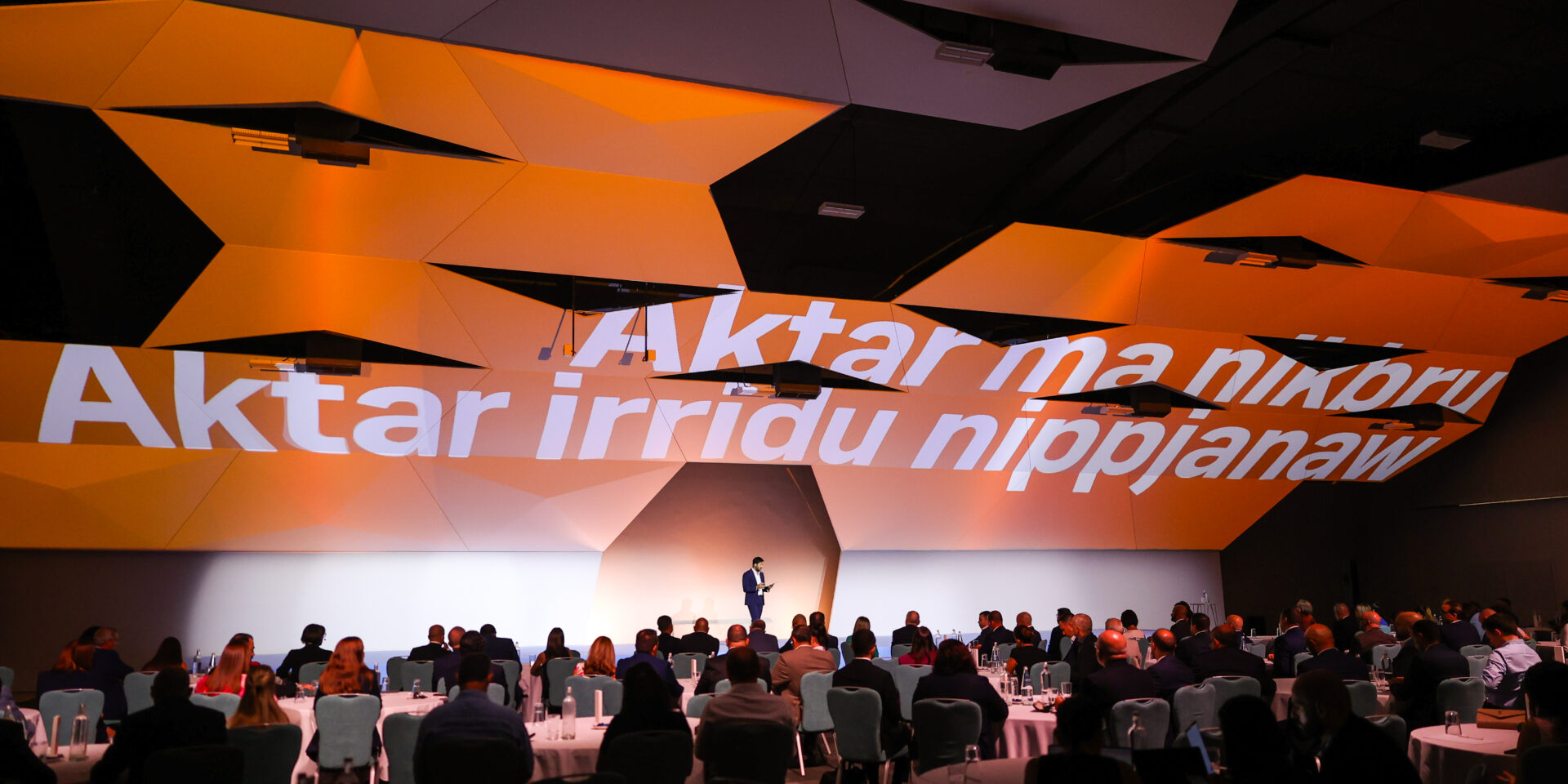
Planning Growth Better: Antoine Zammit Addresses Government’s First 100 Days Conference
STUDJURBAN Founder and Director Dr Antoine Zammit was invited as an expert speaker on planning and infrastructure at the Maltese Government’s conference marking its first 100 days, where he reflected on how Malta can continue to grow while placing greater emphasis on planning quality, liveability and the everyday experience of its communities.
His intervention, Nippjanaw Malta Aħjar: Tkabbir, ġustizzja u kwalità tal-ħajja (Planning Malta Better: Growth, Justice and Quality of Life), drew on his work as an architect, urban designer academic and policy consultant.
At the heart of the speech was a simple proposition: good planning should not be measured only through permits, policies or development output, but through the quality of the places people experience every day.
Antoine argued that Malta’s continued economic and demographic growth inevitably places increasing pressure on land, transport, infrastructure, housing, public space and the character of towns and villages.
The key question, therefore, is not simply whether Malta should continue to grow, but “How can we plan that growth better?”
This requires a shift towards a planning system that considers not only development capacity, but also the wider and cumulative impact of decisions on urban character, mobility and quality of life.
The intervention also addressed proposed reforms to the planning appeals system, particularly the principle that an eligible appeal should retain practical meaning before irreversible works take place. Antoine stressed, however, that fairness must work in both directions: citizens should have effective rights of appeal, while applicants should benefit from efficient and predictable procedures.
As he noted, justice does not mean delay. It means a process that is fair, effective and foreseeable for all.
Looking ahead, he highlighted the importance of revising Malta’s Local Plans so they become more than development maps, providing a longer-term spatial vision that integratesdensity, land use, mobility, infrastructure, public space and urban character.
He also reiterated the need for transition zones around Urban Conservation Areas and stronger safeguards for coherent streetscapes, including established terraced-house areas. Their value, he argued, cannot be understood purely in terms of redevelopment potential;that is, financial value. It should be understood in terms of urban value.
A further focus of the speech was the need to rethink how Malta conceives streets and infrastructure.
Drawing on STUDJURBAN’s involvement in projects including Slow Streets, Vjal Kulħadd, Mosta and Birgu, Antoine argued that streets should not be understood simply as corridors for vehicles, but as public spaces where people walk, meet, travel to school, access services and participate in everyday community life.
The wider ambition should be to connect individual squares, gardens, parks and sustainable mobility routes into a coherent network of safe, accessible and greener public spaces. This also means broadening our understanding of infrastructure – trees are infrastructure; shade is infrastructure; permeable ground is infrastructure. In Malta’s climate, these are fundamental components of comfortable, resilient and liveable urban environments.
The intervention concluded by stressing that economic growth, investment and better quality of place should not be seen as competing objectives. Malta can continue to develop — but that growth must be planned more carefully, respond more intelligently to context and place greater value on public space, mobility, heritage and everyday liveability.
For STUDJURBAN, this remains central to good planning and urban design – not simply asking what can be built today, but considering the kind of Malta those decisions will leave behind tomorrow.

